Symptome und Diagnosestellung

Die Anzeichen und Symptome sind bei den Betroffenen unterschiedlich. Im Allgemeinen weisen die betroffenen Personen Lernschwierigkeiten, spezielle Merkmale im Gesichtsbereich, eine Immunschwäche, Hörschäden und Skelettanomalien auf.1

Zu den charakteristischen Merkmalen im Gesichtsbereich können ein großer Kopf, eine prominente Stirn, ein tiefer Haaransatz, gerundete Augenbrauen, große Ohren, ein abgeflachter Nasenrücken, ein vorstehender Kiefer, weit auseinander stehende Zähne, übermäßig stark ausgebildetes Zahnfleisch und eine große Zunge gehören.2
symptoms and diagnosis

A pilot study of 1010 individuals, suspicious to MPS based on clinical assessment, investigated the α-mannosidase activity in dried blood spots samples previously tested for six different MPS types.3 Results showed a higher than expected number of Alpha-Mannosidosis cases, suggesting that the incidence of the disease may be higher than previously thought.3

Therefore, for patients with possible MPS but with a negative MPS test result, subsequent alpha-mannosidase testing is strongly recommended.3

Alpha-Mannosidosis signs and symptoms

In Alpha-Mannosidosis patients, signs and symptoms vary amongst people. In general, affected individuals may have:4

intellectual-disability

intellectual
disability

distinctive facial features

distinctive
facial features

immuno deficiency

immuno
deficiency

hearing impairment

hearing
impairment

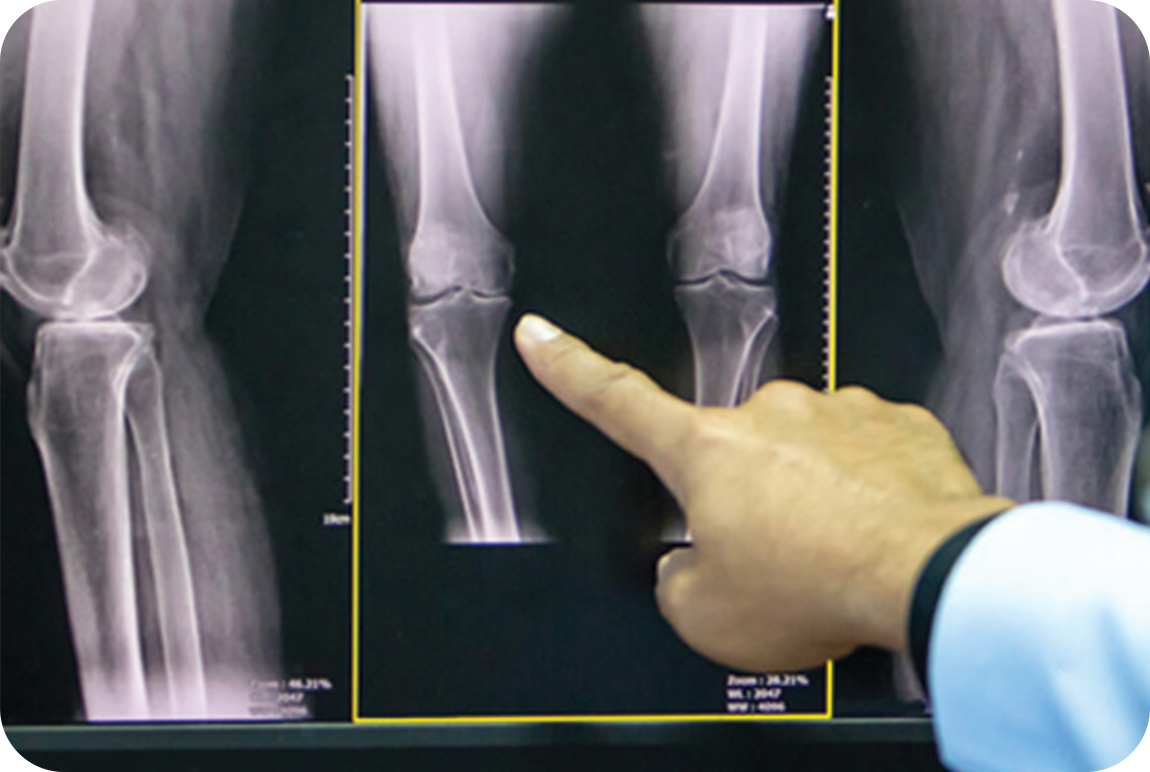
skeletal abnormalities

skeletal
abnormalities

head

Characteristic facial features can include:2

  • large head;
  • prominent forehead;
  • rounded eyebrows;
  • flattened nasal bridge;
  • protruding jaw;
  • widely spaced teeth;
  • overgrown gums;
  • large tongue.

Alpha-Mannosidosis severity

Es wurden mindestens drei klinische Typen für die α-Mannosidose (mild, mittelschwer und schwer) vorgeschlagen, die auf dem jeweiligen Schweregrad der Symptome beruhen.3

Typ 1

MILDE FORM

Bei der leichten Form, die klinisch nach einem Alter von zehn Jahren erkannt wird, liegen keine Skelettanomalien vor, und sie schreitet nur sehr langsam fort.

Typ 2

GEMÄẞIGTE FORM

Eine gemäßigte Form, die vor dem 10. Lebensjahr erkannt wird und bei der Skelettanomalien vorliegen. Sie schreitet langsam fort und im Alter von 20 – 30 Jahren entwickelt sich eine Ataxie. Sie kommst am häufigsten vor.

Typ 3

SCHWERE FORM

Eine schwere Form mit Skelettanomalien, die sofort erkannt wird. Die Progression ist offensichtlich und führt aufgrund einer primären Beteiligung des zentralen Nervensystems oder einer Myopathie zu einem frühen Tod.

Angesichts der Vielfalt der dokumentierten Mutationen, des breiten Spektrums und des Schweregrades der Symptome sowie der fehlenden Verbindung zwischen bestimmten Mutationen und der Symptomatik wird die Krankheit klinisch als ein Kontinuum betrachtet, das von leicht bis schwerwiegend reicht.4,5

Alpha-Mannosidosis diagnosis

Early diagnosis of Alpha-Mannosidosis is key to timely initiation of treatment, and minimization of progressive symptoms.1, 7

A diagnosis of Alpha-Mannosidosis is suspected based upon identification of:2

mental retardation

mental
retardation

skeletal changes

skeletal
changes

hearing loss

hearing
loss

recurrent infections

recurrent
infections

Other than that, also a thorough clinical evaluation and a detailed patient history are key elements.

Diagnostic methods useful for Alpha-Mannosidosis identification are:

Due to the difficulty to get an early diagnosis and the lack of internationally recognized guidelines, in 2019, an international working group of experts met to establish an algorithm to help general practitioners and specialists (metabolic and non-metabolic) to achieve early diagnosis of Alpha-Mannosidosis and initiate adequate treatment as soon as possible.7

How to recognize
Alpha-Mannosidosis

How to recognize
Alpha-Mannosidosis

  1. Beck M Olsen KJ, Wraith JE et al. Natural history of alpha-mannosidosis: a longitudinal study. Orphanet J Rare Dis 2013;8:88
  2. Malm D, Nilssen O. Alpha-mannosidosis. Orphanet J Rare Dis 2008;3:21
  3. Malm D, Nilssen O. Alpha-mannosidosis. Orphanet J Rare Dis 2008;3:21
  4. Beck M Olsen KJ, Wraith JE et al. Natural history of alpha-mannosidosis: a longitudinal study. Orphanet J Rare Dis 2013;8:88
  5. Borgwardt L, Lund AM, Dali CI. Alpha-mannosidosis – a review of genetic, clinical findings and options for treatment. Pediatr Endocrinol Rev 2014;12 Suppl 1:185-91
  6. Malm D, Nilssen O. Alpha-mannosidosis. Orphanet J Rare Dis 2008;3:21.
  7. Malm D, et al. The natural course and complications of alpha-mannosidosis—a retrospective and descriptive study. J Inherit Metab Dis. 2014 Jan;37(1):79-82.